Who We Are
We try to share the blessing of this place in various ways.
We are always happy to introduce people to horses or to pass on what we are learning about vegetables, and about living on and with the land.
We also love to experiment with different crops and to share our successes and failures.
Microfarming
Since 2011 we have been inviting others interested in growing food for their own use or as a business to cultivate sections of our land.
Initially, almost a dozen microfarmers grew herbs and vegetables, and there were also bee colonies at Hillesum Farm.
Our dream was to bring together a group of people who would be respectful stewards of this land, and who wanted to share their love of growing, their curiosity and their expertise with like-minded individuals.
Many of that initial group underestimated the amount of work involved, and the only remaining microfarmers all are trying to create businesses and small farming ventures. successes and failures.
Horses
Since the beginning, our focus has been on creating a refuge for horses—a place where they can live out their days in peace. We are grateful for the time we have been able to spend with so many beautiful horses.
Etty Hillesum's Story
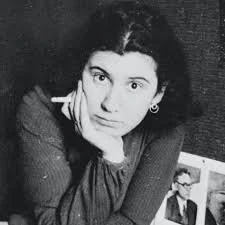
Etty Hillesum was a Dutch Jew whose life ended at age 29 in Auschwitz. However, it is neither the brevity of her life, nor its tragic conclusion, that makes Etty Hillesum special. What made her special was what has allowed adherents of several different religious streams to claim her as exemplary of what is best in their traditions:
In its outward manifestation Etty Hillesum’s life was neither particularly Jewish nor Christian nor anything else; however, it was unequivocally and uncompromisingly hers, dismissive of the artificial boundaries between one person and another, one group of human beings and the next. In her relentless search for meaning and truth and love Etty came to transcend even the most unbridgeable gap of all: the one that divides us from recognizing the humanity of our enemies.
Watching her friends whom she had cared for and nursed as a volunteer in the Westerbork camp disappear into the trains, knowing where they went, and finally even choosing to follow them, did not eradicate her appreciation and celebration of life, nor her gratitude for being given the opportunity to experience it as long and fully as she might. To the end she made better what she could, and tried to recognize God’s hand even in those things she could not.
The name “Hillesum“ is to remind us simply of that: that we must strive to see as kindred spirits even those with whom we do not agree, that all are God’s children entitled to be treated as such.
Of course, even in her extraordinary ability to resist bitterness and cynicism and the demonization of the other, Etty Hillesum has good company, from Rebbe Nachman of Bratzlav to Muhammas Gandhi to Mother Teresa. They all embody what the Dalai Llama calls „the religion of kindness“ that is the shared heritage and obligation of all human beings.